
API usage billing that matches every call
With API usage billing, customers pay for the requests they make. Payrudder counts each call once and prices it per unit, by tier or by package. Quota checks are fast enough to sit in your request path.
The hard part
- 01
Millions of small events arrive, and retries must not count twice
- 02
Tiered prices are easy to describe and hard to calculate right
- 03
Quotas have to be checked on every request without slowing it down
How Payrudder handles it
Idempotent ingest in batches of 500
A repeated idempotency key comes back as a duplicate and is not counted again. Once an event is accepted, it is not lost.
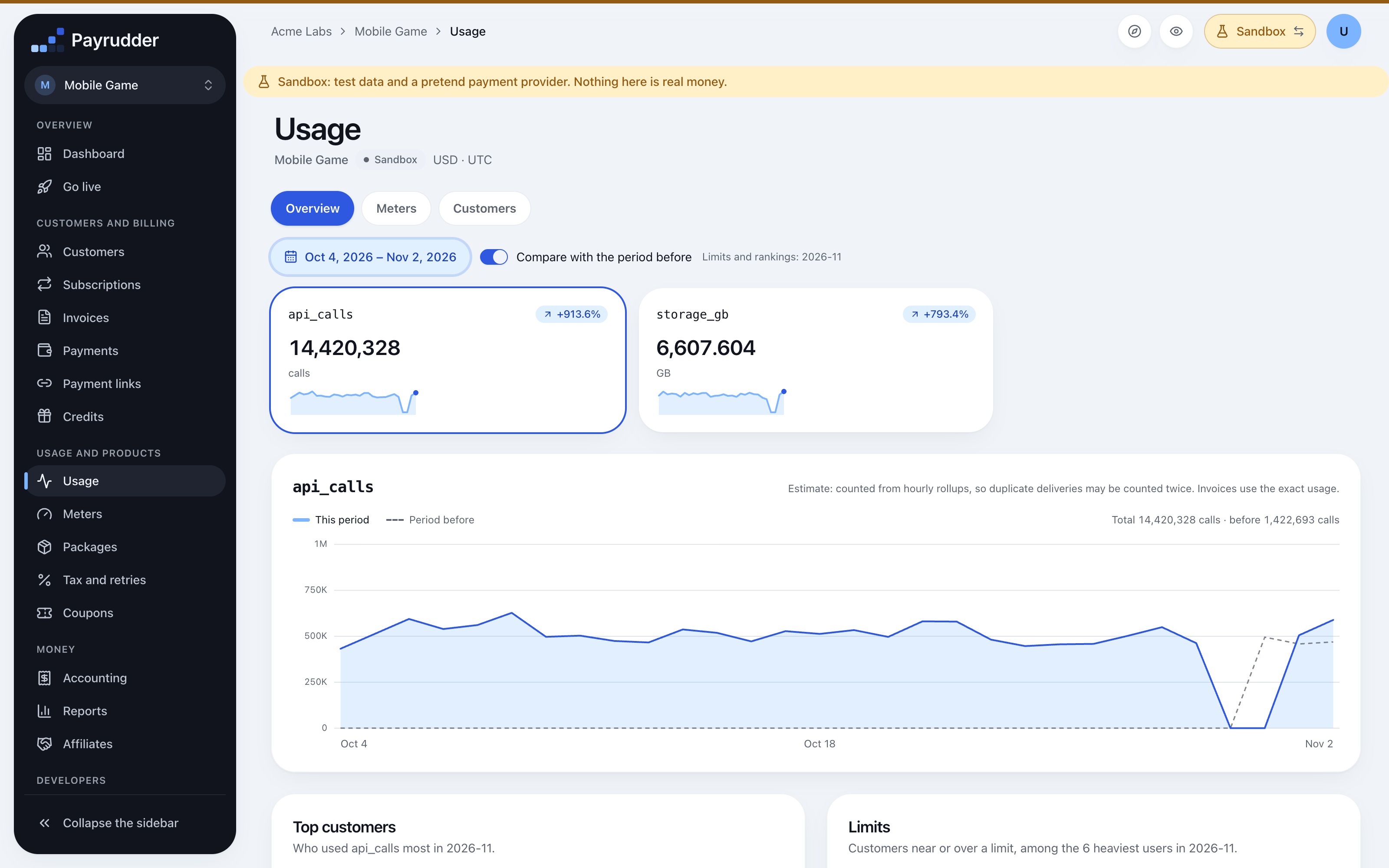
Per unit, tiered or package
Price calls per unit, with graduated tiers or in packages, plus a fixed monthly fee if you want one.
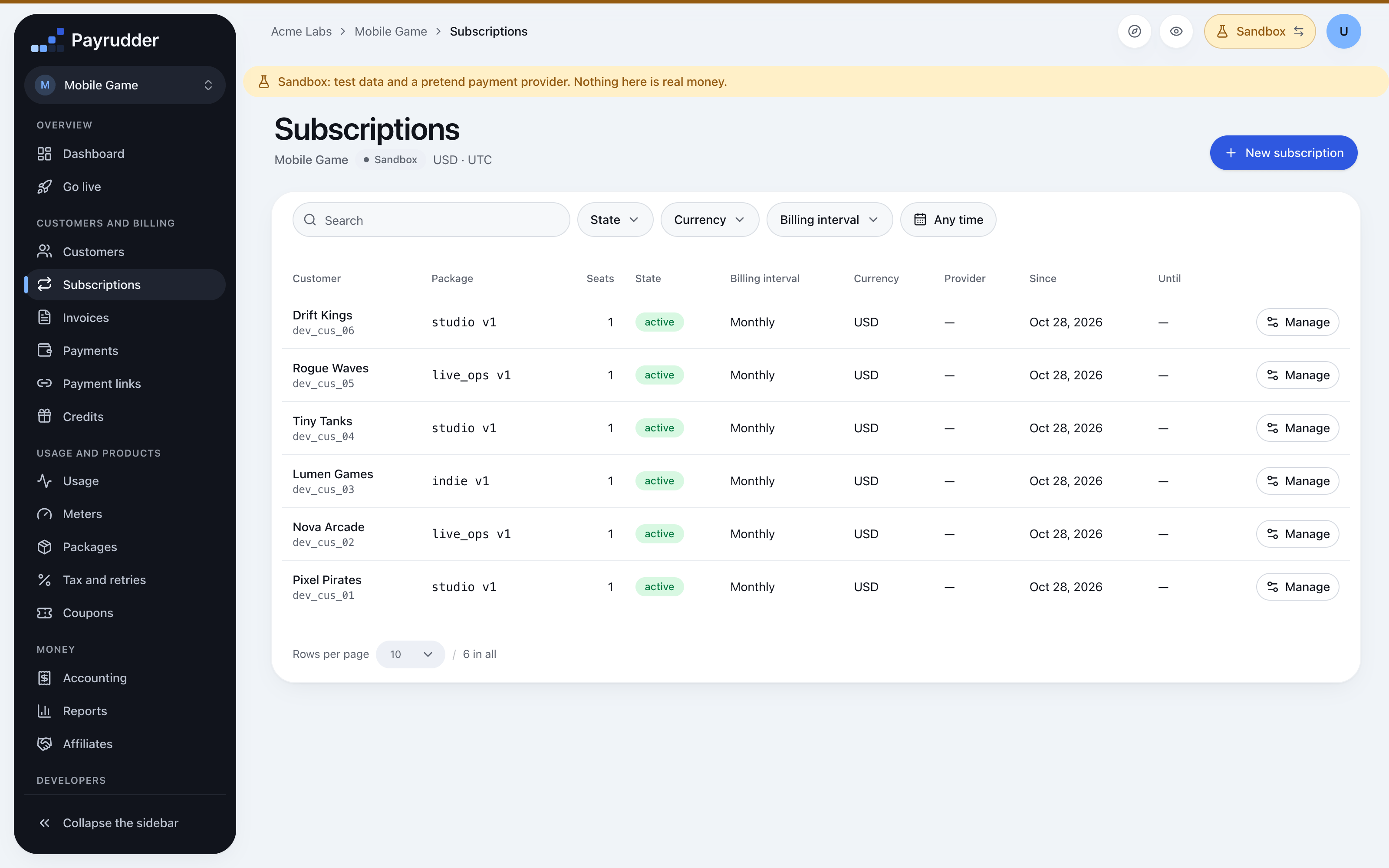
Quotas in milliseconds
Entitlement checks read from Redis counters. The counters are reconciled with the authoritative totals at regular intervals.
Features used
- Usage meteringSend usage as it happens. Every event is counted once, even when your client retries.
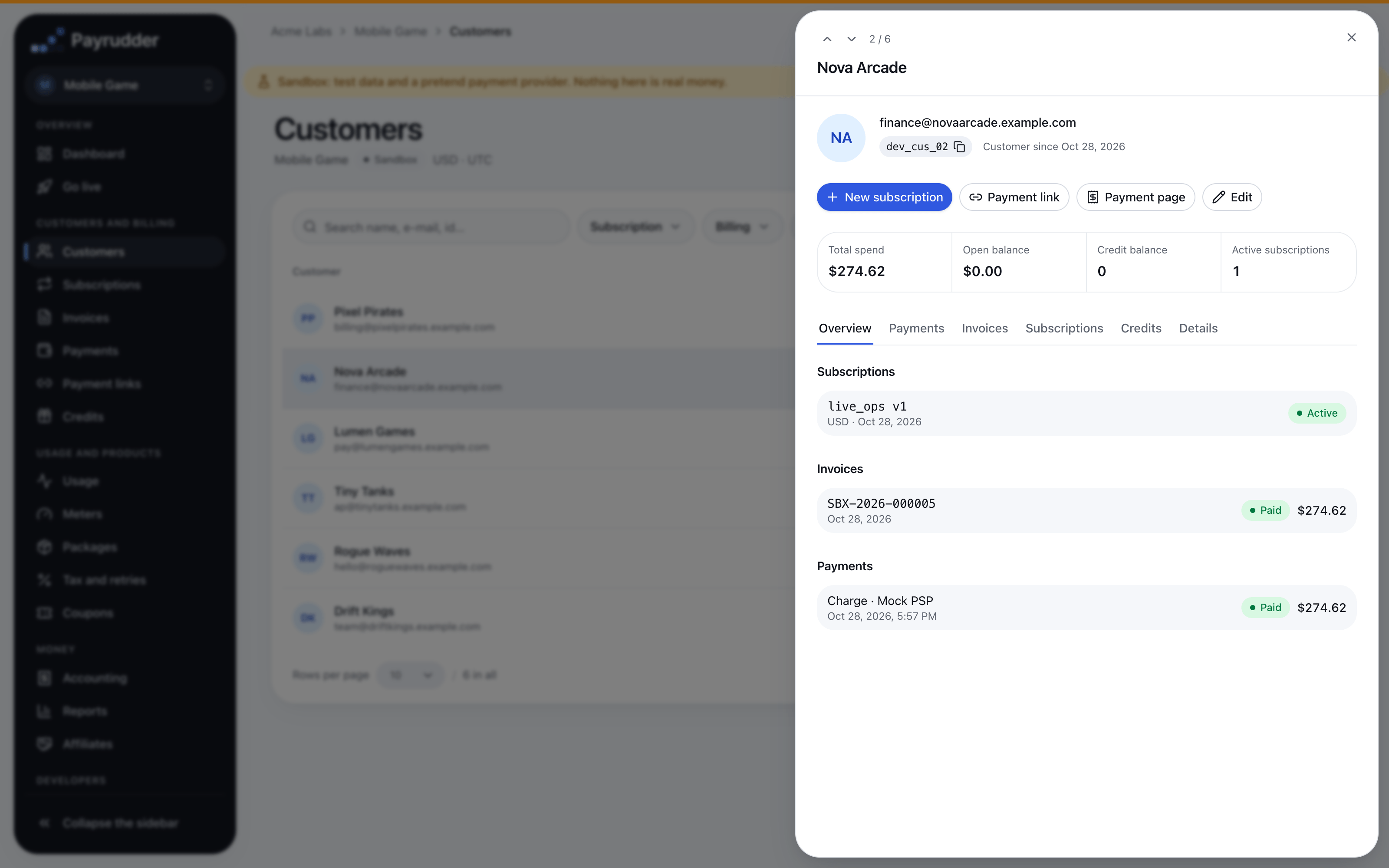
- Subscription billingMonthly or yearly plans, trials, upgrades with a preview, coupons, tax rates and invoice pages.
- Multi-tenant billingRun billing for many apps from one account. Each app has a sandbox and a live environment with its own keys.
Questions
How many events can it take?
On a laptop with a 2.9 GiB Docker VM it sustained 5,000 events per second at p99 32 ms with no errors. Server hardware does better. The benchmark report covers the method and the targets it missed.
Can I give a free tier?
Yes. Graduated tiers can start with a free first tier, for example the first 10,000 calls.
Billing for AI products
Meter tokens, images or minutes per customer and bill what was used.
See the use caseSelling SaaS from Türkiye
Local cards through iyzico, international sales through Paddle, one billing system.
See the use caseBilling for many apps
Run billing for every product you own from one account.
See the use case
Start billing by usage
The free plan covers your first live payments. Hook up one meter, close a month in test mode, then go live.